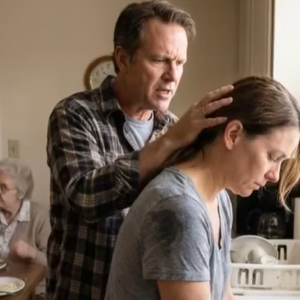
At dinner, my dad announced, “Your nieces are the only ones who’ll ever make something of themselves—not like your boy.” Everyone laughed.
My eight-year-old didn’t.
I just said, “Cool. Then I’m done covering her $1,600 school fees.”
My sister went still.
My dad caught my elbow and whispered, “Please—not here.”
And then I…
I never thought a simple family dinner could shatter my son’s world in under thirty seconds. Not in my father’s house—Walnut Creek quiet outside, porch light glowing soft on the trimmed hedges, the faint noise of a 49ers game drifting from the living room like background music for whatever we pretended we were. Not at my father’s mahogany dining table, the same heavy table where I’d eaten countless meals growing up, elbows tucked in, napkin on my lap, listening to Frank explain how the world worked.
We’d been talking about school, weekend plans, upcoming projects—the normal small stuff that keeps people from noticing the big, ugly things sitting under the surface. Tyler sat beside me in his too-big hoodie, picking at his mashed potatoes the way kids do when they’re trying to disappear. Across from him, my sister Melody leaned into the spotlight like she always did, bragging about her daughter Khloe’s latest academic achievements with the polished rhythm of someone reading a highlight reel.
The air felt warm and familiar, the kind of American family warmth that looks good from the outside: casserole smells and iced tea and the clink of forks on plates. I almost believed it, for a minute.
Then my father, Frank, cleared his throat.
It was the same sound he’d used when I was a kid and he wanted the room to fall in line. Not loud. Not angry. Just certain.
His next words cut through the table like a blade through silk.
“You know what I’ve been thinking?” he announced, gesturing toward my niece with obvious pride.
Melody’s smile widened, ready.
“Your niece and her sisters are the only ones in this family who will actually make something of themselves,” Frank said. He flicked his eyes, casually, to Tyler. “Not like your boy there.”
The laughter that followed—Melody’s and Frank’s—echoed off the walls. It wasn’t a roar. It was worse than that. It was easy laughter, like this was harmless, like this was normal.
Tyler’s fork clattered against his plate.
I watched my son’s face crumple, the pain immediate and unmistakable. It was the kind of hurt I recognized the way you recognize a song you didn’t want to learn by heart.
Silence stretched across the table after the laughter died, thick and sticky, like humidity before a storm.
I set my water glass down with deliberate calm.
Something inside me shifted—a protective fury that had been building for months, finally snapping into place.
I looked at Melody first. Her confident smile wavered under my steady gaze.
Then I turned back to my father.
“You know what, Dad?” I said, keeping my voice level despite the rage churning in my chest. “That’s actually really helpful to hear.”
Frank blinked, still riding whatever power he thought he held.
“Since you’re so confident that Khloe is the only one with potential in this family,” I continued, “I think it makes perfect sense for me to stop paying her $1,700 monthly tuition at Riverside Academy.”
The transformation in the room was immediate and electric.
Melody’s face drained of all color. Her mouth fell open as she stared at me like I’d spoken in another language.
Frank’s confident demeanor crumbled as he processed what I’d just said, his eyes darting between me and Melody with growing panic.
“Norton,” Melody stammered, her voice barely above a whisper. “What are you talking about? You don’t pay Khloe’s tuition. I handle all her school expenses myself.”
I pulled out my phone and opened my banking app. My thumb scrolled, slow and steady, through the automatic monthly transfers I’d been making for the past three years.
“Really?” I asked.
Because according to Wells Fargo, I’d been transferring exactly $1,700 to Riverside Academy every month since September of 2021.
“That’s when you lost your marketing position at Henderson Creative,” I said. “Remember?”
Frank reached across the table and grabbed my forearm. His fingers dug into my skin with desperate pressure, like he could physically stop the truth from leaving my mouth.
“Please, Norton,” he whispered, his breath warm and urgent. “Not here. We can discuss this privately later.”
“Oh, we’re definitely going to discuss this,” I replied, gently but firmly, removing his hand from my arm. “But first, let’s make sure everyone understands exactly what’s been happening in this family for the past few years.”
I turned my phone screen toward them, showing the detailed transaction history that painted a clear picture of my financial support.
“See this recurring payment every fifteenth of the month?” I said. “$1,700 to Riverside Academy for Khloe’s tuition and fees.”
I scrolled.
“And this one on the third—$450 for Dad’s diabetes medication and blood pressure pills.”
I scrolled again.
“Oh, and this beauty right here,” I added, voice steady, almost conversational. “Every first of the month, $325 for Melody’s Honda Accord payment.”
Tyler looked up for the first time since Frank’s comment. His eyes were wide, absorbing the numbers, the pattern, the truth behind the adult performance.
Melody had gone completely silent. Her hands trembled as she clutched her napkin like it was the only thing holding her together.
“You see,” I continued, feeling my voice gain strength with each revelation, “while you’ve both been treating Tyler and me like we’re some kind of family disappointments, I’ve actually been the one keeping this whole operation afloat.”
I let that hang.
“Funny how that works, isn’t it?”
Frank’s face turned an alarming shade of red as he struggled to process the implications of what I was laying out.
“Son,” he said, voice cracking, “I had no idea you were helping with Melody’s expenses. She told me she’d found another job.”
“Did she now?” I asked, raising an eyebrow as I turned to my sister.
“Melody,” I said, “would you like to tell Dad about this amazing new job you’ve had for the past three years? The one that somehow allows you to afford private-school tuition for Khloe while living in that beautiful apartment downtown?”
Melody’s composure finally cracked. Tears streamed down her cheeks as she looked between Frank and me, realizing her carefully constructed façade was collapsing in real time.
“I was going to tell you both,” she whispered, voice breaking. “I just didn’t want Dad to worry. And I knew Norton could afford it, so I thought it would just be temporary until I got back on my feet.”
“Three years, Melody,” I said, my tone sharpening.
“Three years of letting Dad believe you were handling everything yourself while I quietly covered your expenses.
“Three years of family dinners where you and Dad made jokes about Tyler’s potential while I funded your daughter’s elite education.”
The weight of it pressed down on the table.
Frank looked deflated. The authority in his posture collapsed inward, replaced by shame and confusion.
Tyler had stopped eating entirely. He watched the adult drama unfold with the serious attention of a child beginning to understand that the family dynamics he’d accepted were far more complicated—and far more unfair—than he’d realized.
“But, Norton,” Frank said weakly, “you never said anything. How were we supposed to know?”
I leaned back in my chair, studying my father’s face with a clarity that felt almost cold.
“Dad,” I said, “in the past year alone, how many times have you told me Tyler needed to apply himself more? How many gatherings have included comments about how he should be more like his cousins? How many times have you suggested maybe I’m not pushing him hard enough academically?”
Frank opened his mouth to respond, then closed it again. There was no answer he could give that wouldn’t make it worse.
“The thing is,” I continued, “I never minded helping family. That’s what we do for people we love.”
I looked at Tyler, then back at Frank.
“But watching you tear down my son’s confidence while I’m literally paying for the success you’re using to belittle him—that crosses a line I didn’t even know existed until tonight.”
The silence was heavy, but I wasn’t finished.
There was a deeper truth they needed to understand—one that would explain why their casual cruelty toward Tyler carried consequences they’d never considered.
“Actually,” I said, “there’s something else you both need to understand about why tonight’s comments were particularly devastating.”
I pulled out my phone again and opened a folder labeled Legal Documents.
“Tyler’s mother, Sandra, has been building a custody case against me for the past eight months,” I said.
Frank and Melody straightened in their chairs like someone had flipped a switch.
Tyler looked up at me with surprise, clearly not aware I’d been dealing with this legal battle.
“Sandra’s attorney has been collecting evidence to prove I’m an unfit father,” I continued, keeping my voice steady despite the emotional weight pressing on my ribs, “and that Tyler would be better off living with her full-time instead of our current fifty-fifty arrangement.”
I watched their faces change as the words sank in.
“They’ve been particularly interested in documenting how my own family treats Tyler compared to his cousins.”
Frank’s face went pale.
“Norton,” he said, trying to sound reasonable, “surely you don’t think our family conversations would be relevant to a custody hearing.”
“Oh, but they absolutely are,” I replied.
I opened my voice recording app.
“Sandra’s lawyer specifically instructed her to gather evidence about Tyler’s home environment,” I said, “including how he’s treated by extended family members. Every time Tyler comes home from a family gathering feeling inadequate or stupid, Sandra documents it.”
I held up my phone, showing them the recording that had been running throughout dinner.
“In fact,” I said, “tonight’s dinner has been recorded in its entirety.”
Melody gasped.
“Sandra’s attorney will be very interested in hearing my father tell my eight-year-old son that he’ll never amount to anything significant.”
Melody’s hand flew to her mouth.
“Norton,” she said, voice trembling, “you can’t possibly use family conversations against us in court. That’s not fair.”
“What’s not fair,” I replied, “is that I’ve been fighting to maintain joint custody of my son while my own family provides ammunition to his mother’s legal team.”
I reached into my jacket pocket and pulled out a printed document. The paper felt heavier than it should’ve.
“Let me read you something from Sandra’s most recent court filing,” I said.
I unfolded it carefully and read aloud:
“According to the petitioner’s observations, the minor child consistently returns from paternal family gatherings with decreased self-esteem and reports feeling inferior to his cousins. The petitioner believes that the paternal extended family environment is detrimental to the child’s emotional development and academic confidence.”
Frank went completely still.
His earlier bravado drained away, replaced by a kind of horror—like he could suddenly hear his own voice from the outside and didn’t like what it sounded like.
Tyler stared at me with wide eyes, processing the idea that these dinners had been part of something bigger, darker.
“But surely the courts wouldn’t take family teasing seriously,” Frank said weakly, though his voice lacked conviction.
“Dad,” I said, “let me play you something from last month’s barbecue.”
I scrolled through my phone until I found the file.
“This is from when Sandra came to pick up Tyler,” I said, “and you spoke with her directly about his academic future.”
I pressed play.
Frank’s voice filled the dining room with crystal clarity:
“Sandra, I have to be honest with you. Tyler’s a sweet kid, but he’s just not academically inclined like his cousin Khloe. She’s definitely Harvard material, but Tyler… he’ll probably end up at the community college if he’s lucky.”
The silence that followed was deafening.
Frank stared at the phone as if it were a venomous snake.
Melody covered her face with both hands, mortified.
“Sandra’s attorney plans to use that exact quote,” I continued, “in their argument that even my own father considers me an inadequate parent who’s raising an academically inferior child.”
I felt my jaw tighten.
“They’re building a case that Tyler needs to be removed from an environment where his own grandfather publicly declares him a failure.”
Tyler’s voice cut through the adult tension with startling maturity.
“Dad,” he asked quietly, “is that why you always ask me about school so much lately—because you’re worried Mom might try to take me away?”
I reached over and placed my hand gently on his shoulder.
“Yes, buddy,” I said, meeting his gaze with honest acknowledgment. “Mom thinks you might be happier living with her full-time, and she’s been trying to prove that our family situation isn’t good for you.”
“I don’t want to live with Mom full-time,” Tyler said immediately, his voice growing stronger. “I like living with both of you. And I especially like the weeks when I’m here with you.”
Frank looked stricken, watching this exchange like it was a mirror showing him something he didn’t want to see.
“Norton,” he said, voice thick, “I had no idea. If I’d known about the custody situation, I never would have said those things to Sandra.”
“But you did say them, Dad,” I replied quietly. “And you’ve been saying similar things about Tyler for months, not caring how they might affect him—or me.”
I exhaled slowly.
“The custody battle just gives those words legal consequences instead of just emotional ones.”
Melody finally looked up. Her makeup was streaked with tears.
“What can we do to fix this?” she asked. “Is there any way to help your case instead of hurting it?”
I studied both of their faces, noting the genuine distress in their expressions.
“Actually,” I said, “there might be.”
I paused.
“But first, you both need to understand something important about Tyler that you’ve been completely ignoring.”
I reached into my jacket pocket and pulled out a manila folder I’d brought specifically for this moment. The weight of the documents inside felt substantial—years of proof I’d kept quiet, partly out of humility, partly out of protection.
“Since you’re both so concerned about Tyler’s academic future,” I said, opening the folder and spreading certificates and letters across the mahogany table, “let me share what he’s actually been accomplishing while you’ve been focused on comparing him unfavorably to his cousins.”
Frank leaned forward, adjusting his reading glasses.
His expression shifted from confusion to surprise as he took in the letterheads and official seals.
“Tyler,” I said gently, “come here for a minute, buddy.”
My son slid from his chair and stood beside me, curiosity battling the hurt still lingering in his eyes.
I picked up the first certificate and held it so everyone could see.
“This is Tyler’s first-place award from the regional mathematics competition held at UC Berkeley last spring,” I said. “He competed against over two hundred students from across Northern California and scored in the ninety-eighth percentile.”
Tyler’s face lit up with pride.
Across the table, Melody and Frank stared at the official document like it had appeared by magic.
“But Tyler,” Melody said, bewildered, “you never mentioned winning a math competition. Why didn’t you tell us?”
Tyler looked up at me for guidance, then answered quietly.
“Dad said I should keep my school stuff private unless someone specifically asked about it,” he said. “He said some people might feel bad if I talked about winning things all the time.”
I nodded. I remembered that conversation well.
I’d taught him not to brag because I wanted him to stay humble—but also because I’d noticed family gatherings went smoother when Tyler didn’t mention his successes.
Frank’s face flushed with shame, then flickered with defensive anger.
“Norton,” he said, “are you suggesting we would have been jealous of Tyler’s achievements?”
“I’m not suggesting anything, Dad,” I replied. “I’m stating facts.”
I pulled out another document.
“This is a letter from Tyler’s computer science teacher at Lincoln Elementary,” I said. “Tyler created a mobile application that helps children with reading disabilities practice phonetic recognition through interactive games.”
I handed the letter to Frank.
His eyes widened as he read the teacher’s detailed description.
“The app has been downloaded over five thousand times since Tyler uploaded it to the educational software platform last fall,” I continued. “His teacher submitted it to the state department of education as an example of exceptional student innovation.”
Melody reached across the table to read over Frank’s shoulder. Her expression shifted from skepticism to amazement.
“Tyler actually programmed a working mobile application at eight years old?” she whispered.
“Nine years old now,” Tyler corrected politely, a small smile tugging at the corners of his mouth. “And I’m working on a new one that helps kids learn multiplication tables through space-exploration games.”
Frank set the letter down and looked directly at Tyler, his voice quieter than usual.
“Tyler,” he said, “I had no idea you were interested in computer programming. How did you learn how to create applications?”
“Dad teaches me on weekends,” Tyler replied matter-of-factly. “We work on coding projects together in his home office. I also watch online tutorials and read programming books from the library.”
I pulled out the next set of documents.
“These are Tyler’s standardized test scores from last semester,” I said. “He scored in the ninety-ninth percentile in mathematics and the ninety-sixth percentile in reading comprehension.”
Melody studied the score reports, comparing Tyler’s results to national averages.
“These scores are incredible,” she said softly. “Norton—Tyler is performing at a high school level in mathematics.”
“Actually,” I said, reaching for the final document, “that brings me to the most important piece of information you need to understand about Tyler’s academic future.”
I unfolded a letter bearing the official logo and letterhead of the Massachusetts Institute of Technology.
Frank and Melody recognized the seal immediately.
“Tyler has been accepted into MIT’s summer program for gifted young scholars,” I announced, holding the acceptance letter so they could read it clearly.
“This is a highly competitive program that accepts only sixty students nationwide between the ages of eight and twelve.”
Silence flooded the room.
Frank stared at the MIT letterhead as if he couldn’t quite process what he was seeing.
Melody’s mouth hung open.
“The program runs for six weeks during the summer,” I continued, “and focuses on advanced mathematics, computer science, and scientific research methods. Tyler will be working alongside graduate students and faculty members on real research projects.”
Tyler beamed.
He didn’t boast. He simply allowed himself, for once, to shine.
“But, Norton,” Frank said slowly, genuine remorse breaking through the confusion, “if Tyler is this academically gifted… why didn’t you ever tell us? We had no idea he was achieving at such a high level.”
I gathered Tyler’s certificates back into the folder before answering.
“Dad,” I said firmly, “I kept Tyler’s achievements private because I wanted to protect him from exactly what happened at tonight’s dinner.”
I looked around the table.
“I’ve watched how this family responds to academic competition, and I didn’t want Tyler to become a target for jealousy or resentment.”
Melody looked stricken.
“Are you saying we would have treated Tyler badly if we’d known about his accomplishments?”
“I’m saying Khloe’s academic success has always been celebrated loudly and frequently at family gatherings,” I replied, “while any mention of Tyler’s interests or achievements has been dismissed or minimized.”
I didn’t raise my voice. I didn’t have to.
“Tonight’s dinner was just the most explicit example of a pattern that’s been going on for years.”
Frank removed his glasses and rubbed his eyes.
“Tyler,” he said, looking directly at his grandson with something like humility for the first time, “I owe you a sincere apology. I said something very unfair and untrue about your future, and I was completely wrong.”
Tyler studied him carefully.
“It’s okay, Grandpa,” he said with characteristic thoughtfulness. “Dad explained that sometimes people say mean things when they don’t understand the whole situation.”
The maturity in Tyler’s response hit Frank hard. I watched my father’s eyes fill with tears.
“But there’s something else you all need to understand about Tyler’s education,” I said.
I held the folder in my hands like evidence.
“While I’ve been paying for Khloe’s expensive private-school tuition, Tyler has been achieving all of this academic success in regular public school—without any tutoring or special programs.”
As Frank struggled to absorb that, I realized there was still another layer of deception that needed to be addressed.
The comfortable assumptions my family had been living with were about to be demolished, and part of me—cold, curious—wanted to see how they’d react when the floor dropped out from under them again.
“Actually, Dad,” I said, “since we’re being completely honest about family finances tonight, there’s something else we need to discuss.”
Frank straightened, sensing more bad news.
Melody grew very quiet, panic tightening her features.
“Three months ago, you approached me about investing in Melody’s new consulting business,” I said. “You were very excited about her entrepreneurial spirit and asked if I’d be willing to provide startup funding for what you described as a boutique marketing firm.”
Tyler listened with the serious attention he always gave to adult conversations, though I could tell the business implications were still foggy for him.
“I remember that conversation clearly,” Frank said carefully, voice lacking its usual confidence. “You were very generous to support Melody’s business goals.”
“Yes,” I agreed. “I was generous.”
I opened my banking app again.
“I transferred fifty thousand dollars into Melody’s business account on March fifteenth,” I said, “based on the business plan she presented and your personal recommendation of her project.”
Melody went ghost-white. Her hands shook around her water glass.
“The business plan was quite impressive,” I continued, tone almost casual. “Professional office space. High-end marketing software. Initial client contracts already secured. Melody projected she’d be able to repay the startup loan within eighteen months and potentially offer me a return on my investment.”
Frank nodded slowly, uncertainty creeping into his expression.
“So, naturally,” I said, “I’ve been curious about how the consulting firm has been progressing. I’ve been looking forward to seeing the office space and meeting some of Melody’s new clients.”
I turned to my sister.
“Melody,” I said, “would you like to tell Dad and Tyler about how the marketing consulting business has been developing? Maybe share some success stories from your first few months of operation?”
Silence.
Nearly a full minute passed before Melody looked up. Her eyes were red. Her face was etched with guilt.
“Norton,” she whispered, “I can explain. Please—”
“Please do,” I replied, keeping my tone level. “I’m sure Dad would love to hear about your business accomplishments, especially since he was so confident in recommending your project to me.”
Frank looked back and forth between us, sensing something was very wrong.
“The truth is,” Melody began, voice breaking, “there is no consulting business. There never was.”
Frank’s mouth fell open.
Melody wiped at her cheeks, tears running freely.
“I used the money to pay off my credit card debts,” she confessed. “I owed almost thirty thousand and I was behind on payments. I was terrified I was going to lose my apartment.”
“And the other twenty thousand?” I asked, though I already knew.
Melody swallowed.
“I took a trip to Europe with my friend Jessica,” she admitted, voice barely above a whisper. “We went to Italy and France for three weeks. I told myself I deserved a vacation after being unemployed for so long.”
The silence that followed was deafening.
Frank stared at his daughter as if he’d never seen her before.
Tyler watched with wide eyes, understanding more than he should have.
“Dad,” I said, turning to Frank with deliberate calm, “did you know Melody had no intention of starting a legitimate business when you encouraged me to invest fifty thousand in her non-existent consulting firm?”
Frank opened and closed his mouth, searching for words.
“Norton,” he said finally, “I swear to you, I had no idea. Melody showed me a complete business plan with financial projections and everything. I truly believed she was starting a real company.”
“Actually, Dad,” I said, pulling out another document, “that’s not entirely accurate.”
I held up my phone.
“This is a text message conversation between you and Melody from two weeks before she asked me for the investment money.”
I watched Frank’s face redden as he realized I had access to something he assumed would stay hidden.
“Would you like me to read your exact words,” I asked, “or would you prefer to tell us yourself what you really knew about Melody’s business plans?”
Frank’s expression twisted—fear, embarrassment, regret.
“The text message shows you telling Melody that I would never miss fifty thousand,” I continued, reading directly from the screen, “because I’m good with computers and probably make more than that in a month.”
I scrolled.
“You also wrote that I’m too trusting with family and would probably give her the money without asking too many questions.”
Melody buried her face in her hands, sobbing.
Frank looked defeated.
“But the most interesting part,” I said, scrolling again, “is where you wrote that even if I eventually discovered there was no real business, I wouldn’t take legal action against family because Norton always puts family loyalty above money.”
Tyler spoke up, voice clear and direct.
“Dad,” he asked, “did Grandpa and Aunt Melody steal money from you?”
I looked down at my son.
“Yes, buddy,” I said. “They took money from me by lying about how they planned to use it.”
“That’s called fraud,” Tyler said matter-of-factly. “We learned about it in social studies when we studied business ethics.”
Frank winced, hearing the word out loud from a nine-year-old.
“Norton,” Frank said desperately, “please understand—I never intended for this to hurt you. I genuinely believed Melody would find a way to pay you back eventually.”
“Dad,” I replied, “you conspired with Melody to defraud me of fifty thousand dollars while simultaneously allowing both of you to treat my son like he’s intellectually inferior.”
I let the words settle.
“The money is one thing. But the disrespect toward Tyler while you were literally stealing from me—that’s something else entirely.”
I reached into my jacket and pulled out one final document, the paper stamped with the official seal of the San Francisco District Attorney’s Office.
“Which brings me to the legal resolution of this situation,” I said, unfolding it so they could see the letterhead clearly. “I filed a formal complaint for financial fraud with the district attorney’s office last week.”
Melody’s sobbing intensified.
Frank stared at the document with obvious terror.
“The DA’s office has opened an investigation into wire fraud and conspiracy charges,” I continued. “They’re particularly interested in the text message evidence showing premeditation and deliberate deception.”
Frank reached toward me, desperation in his eyes.
“Norton, please,” he said. “Surely we can work this out within the family without involving criminal charges.”
I studied his face. I saw fear. I also saw the first real hint of accountability.
“Actually, Dad,” I said slowly, “there might be a way to resolve this situation that doesn’t involve criminal prosecution.”
I paused.
“But it would require complete honesty—and significant changes in how this family operates going forward.”
The weight of fraud and consequence sat heavy over the table, but I knew they still didn’t understand the full scope of their dependence on my generosity.
“Before we discuss potential resolutions to the fraud charges,” I said, “there’s one more thing you both need to understand about your current living situations.”
Frank looked up from the letter with dread.
“Dad,” I said, gesturing around the dining room, “do you remember two years ago when you were facing foreclosure on this house?”
Frank’s expression shifted to confusion mixed with discomfort.
“Of course I remember,” he said. “It was a very difficult time financially, but I managed to work things out with the bank.”
“Actually,” I corrected gently, “you didn’t work things out with the bank. I worked things out with the bank.”
Silence.
Frank’s eyes narrowed, then widened.
“What do you mean, Norton?” he asked slowly.
I opened a different banking application, one that showed mortgage payments and property expenses.
“Two years ago,” I said, “when Wells Fargo was preparing to foreclose on this house due to your gambling debts, I purchased your mortgage from the bank for one hundred twenty thousand dollars.”
Frank’s face went completely white.
“You bought my mortgage,” he whispered, “but the bank told me the foreclosure had been canceled because I brought my payments current.”
“The foreclosure was canceled because I paid off your entire debt to Wells Fargo and assumed ownership of your mortgage,” I explained, showing him the official documents. “You’ve been living in my house for the past two years.”
Melody gasped.
“Dad,” I said, “you don’t own your house anymore.”
“Technically, Frank has been renting from me,” I continued, “though I’ve never charged him rent or asked him to sign a formal lease agreement.”
I scrolled.
“I’ve also been paying the property taxes, homeowners insurance, and all major maintenance costs.”
Frank stared at me, shock turning into humiliation.
“But, Norton,” he asked, voice barely above a whisper, “why didn’t you tell me? I had no idea you bought my mortgage. I thought I was living in my own home.”
“I didn’t tell you because I wanted to preserve your dignity,” I replied honestly. “I knew you’d be embarrassed about losing your house, so I structured the arrangement to let you believe you’d solved the problem yourself.”
Tyler spoke up again, cutting straight through the adult fog.
“Dad,” he asked, “does this mean Grandpa has been living in your house while saying mean things about me?”
The simplicity of Tyler’s question hit Frank like a punch.
He looked at his grandson with shame.
“Norton,” Frank said, voice thick, “I feel sick thinking about how I’ve treated you and Tyler while you’ve been supporting me financially. I had no idea about any of this.”
“The property taxes alone are eight thousand dollars per year,” I continued, pulling up the expense records. “Plus homeowners insurance, maintenance, and repairs.”
I scrolled to the most recent.
“Last month, I paid three thousand dollars to replace the roof after those winter storms.”
I showed receipts from the roofing company, along with bills from the plumber, electrician, and landscaping service.
“But how is this possible?” Melody asked, still struggling to process it.
“Dad always talks about this house like he owns it outright,” she said.
“Because I’ve allowed him to maintain that illusion,” I replied. “When friends or neighbors ask about the house, I’ve never corrected Frank’s claims of ownership. I wanted him to feel secure and respected in his own community.”
Frank buried his face in his hands.
“The irony is profound,” I continued, my voice sharpening again. “You’ve been sitting in my house, eating dinner at my table, while telling my son he’ll never amount to anything significant.”
I reached into my jacket pocket and pulled out one more document—this one prepared by my attorney earlier in the week.
“Which brings me to the legal reality of your housing situation,” I said, unfolding the official notice and placing it on the table.
Frank’s hands trembled as he picked it up.
“This is an eviction notice,” he whispered, reading the heading: NOTICE TO QUIT AND DEMAND FOR POSSESSION OF REAL PROPERTY.
“Yes,” I confirmed. “It gives you thirty days to vacate the property or pay the one hundred twenty thousand you owe on the mortgage—plus two years of back rent at fair market value.”
Melody read over Frank’s shoulder, her face paling.
“Norton,” she said, “you can’t possibly be serious about evicting Dad. Where would he live?”
“That’s not really my problem, is it?” I replied calmly. “Frank is a grown man who chose to gamble away his house while simultaneously treating my son with contempt and disrespect.”
I looked at my father.
“The natural consequences of those choices are his responsibility, not mine.”
Frank looked up, tears in his eyes.
“Norton, please don’t do this,” he begged. “I know I’ve made terrible mistakes, but I’m still your father.”
“You’re absolutely right,” I said. “You are my father.”
I held his gaze.
“Which makes your behavior toward Tyler even more inexcusable. You’re his grandfather, and you’ve been systematically undermining his confidence while living on my charity.”
Tyler reached over and took my hand. His small fingers wrapped around mine, steadying me.
“I prepared this eviction notice before tonight’s dinner,” I said, “because I’ve been documenting the pattern of emotional abuse toward Tyler for months. Tonight’s comment about his future was simply the final straw.”
Frank stared at the notice, desperation flickering.
“However,” I said, my tone softening slightly, “there might be a way to avoid eviction and criminal prosecution—if you’re both willing to make fundamental changes in how you treat Tyler and respect our family relationship.”
As the weight of the eviction notice and fraud charges settled over the table, I expected Frank and Melody to start bargaining immediately.
Instead, something unexpected happened.
Tyler pushed back his chair.
He stood up with a maturity and presence that commanded the room.
“Can I say something?” he asked, his young voice steady and clear.
I nodded, surprised.
Tyler walked to his backpack by the front door and returned carrying a small notebook with a worn blue cover.
He set it on the table in front of Frank and Melody and sat down again.
“This is my family journal,” Tyler announced, opening it to reveal pages filled with his careful handwriting. “Dad taught me to write down important things that happen, so I’ve been keeping track of family dinners and visits for the past eight months.”
Frank and Melody stared at the notebook with growing apprehension.
“I want to read you some of the things I wrote down,” Tyler continued, calm and factual. “Not because I want to be mean, but because I think you should know what it feels like to be me at family dinners.”
He flipped to a page marked with a small paper clip and began reading aloud.
“March 23rd. Grandpa Frank told Mom that Khloe is definitely going to be valedictorian of her high school class, but I’ll probably struggle to graduate. Aunt Melody laughed and said I’m a sweet kid, but not very bright. I went to the bathroom and cried for ten minutes. Dad found me and said we could leave early if I wanted.”
The silence that followed was thick enough to choke on.
Frank’s face went completely white.
Melody covered her mouth with both hands.
Tyler flipped to another marked page.
“April 15th. Family barbecue at Grandpa’s house. Khloe showed everyone her science fair project about solar energy. Everyone was very excited and took lots of pictures.”
He turned the page.
“When I tried to show my programming project on Dad’s laptop, Grandpa Frank said nobody wanted to see computer games and that I should go play outside instead. Aunt Melody said I spend too much time on screens anyway. Dad looked angry but didn’t say anything.”
Frank tried to speak.
Tyler held up his small hand with surprising authority.
“I’m not finished yet,” Tyler said firmly. “There’s more you need to hear.”
He turned to a more recent entry.
“November 8th. Thanksgiving dinner. Grandpa Frank told everyone at the table that Khloe will probably get into an Ivy League college, but he’s worried about my future because I don’t seem motivated. Aunt Melody said maybe I have a learning disability that hasn’t been diagnosed yet.”
Tyler’s voice didn’t shake.
“Uncle Brad said some kids are just late bloomers. But Grandpa Frank said he doesn’t think I’m a late bloomer—just not very academic.”
He looked up.
“I wrote down exactly what they said because Dad always tells me to be accurate about important events.”
Melody started crying again, but these tears were different—genuine remorse replacing self-pity.
Tyler closed the journal and looked directly at Frank with an expression far too mature for nine years old.
“Grandpa Frank,” Tyler said quietly, “I want you to know that I’ve always known exactly what you and Aunt Melody think about me. I’m not stupid, even though you think I am.”
He paused, then kept going.
“I understand when adults are being mean, even when they pretend they’re just being honest.”
Frank’s composure cracked. He buried his face in his hands and began sobbing—a deep, wrenching grief that comes from finally understanding the damage you’ve done.
“Tyler,” Frank managed through tears, “I’m so sorry. I never realized how cruel I was being. I thought I was just making casual observations.”
Tyler’s voice stayed steady.
“But here’s the thing, Grandpa,” he said. “I never wanted you and Aunt Melody to like me anyway, because I figured out that you’re not very nice people.”
The honesty hit like a physical blow.
Tyler kept speaking, calm as a judge.
“I realized that people who take money from my dad while being mean to both of us aren’t the kind of people whose opinions matter.”
He looked between them.
“Dad taught me that character is more important than anything else, and you both have shown me your character.”
Tyler opened the journal to the last entry, dated earlier that evening.
“I wrote this before dinner tonight,” he said. “I want to read it to you now.”
He cleared his throat.
“I think tonight might be the night when Dad finally tells Grandpa Frank and Aunt Melody the truth about how they treat us. Dad has been very patient, but I can tell he’s getting tired of their meanness.”
Tyler’s eyes lifted briefly to mine.
“I hope he knows that I don’t need them to love me or think I’m smart because I already know who I am. I’m proud to be Dad’s son and I don’t care if Grandpa Frank thinks I’m not as good as Khloe. Dad and I know the truth about what I can do and that’s enough for me.”
The wisdom in Tyler’s words left everyone at the table speechless.
Even I struggled to process how much my son understood.
Tyler closed his journal and turned to face me.
“Dad,” he said, voice full of conviction, “I never want to live with Mom full-time, no matter what her lawyer says about our family. You’re the best dad in the world, and I want to keep living with you—even if Grandpa Frank and Aunt Melody can’t be nice to us.”
He paused, then reached into his backpack again.
“I also want you to know that I wrote a letter to the judge who’s deciding about where I should live,” Tyler announced, pulling out a folded piece of paper. “I wanted to make sure she understands how I feel about everything that’s been happening.”
Frank and Melody stared at the letter with alarm, understanding the weight it could carry.
“Would you like me to read part of my letter?” Tyler asked.
I nodded, genuinely curious.
Tyler unfolded the paper and began reading in a clear, confident voice.
“Dear Judge Martinez,
“My name is Tyler and I’m nine years old. My parents are divorced and my mom wants me to live with her all the time instead of half the time with each parent. I’m writing to tell you that I want to keep living with my dad because he’s a good parent who takes care of me and teaches me important things.”
Tyler took a breath and continued.
“My mom’s lawyer says my dad’s family is mean to me and that makes it a bad environment, but that’s not my dad’s fault. My dad always protects me and stands up for me when his family is unkind. I think that makes him a good parent, not a bad one.”
He read on.
“I’ve learned that some people in families can be mean or selfish, but that doesn’t mean you should give up on the good people. My dad is a good person, and I want to keep being his son full-time. Please don’t make me live with my mom just because my grandpa and aunt haven’t been nice to us. That would be punishing my dad for other people’s mistakes.
“And that doesn’t seem fair.
“Thank you for listening to me.”
The impact was immediate.
Frank looked devastated.
Melody sobbed openly.
Tyler folded the letter carefully and looked at Frank with direct honesty.
“Grandpa Frank,” Tyler said simply, “I don’t hate you, but I don’t respect you either. You’ve been taking advantage of my dad’s kindness while being cruel to both of us. That’s not how good people behave.”
He turned to Melody.
“Aunt Melody,” he said, “I think you’re selfish and dishonest, but I hope you can learn to be better. Dad always says people can change if they really want to.”
Tyler didn’t sound vindictive.
He sounded certain.
Frank finally looked up, tears streaking his face.
“Tyler,” he said, voice thick, “you’re absolutely right about everything you’ve said. I’ve been a terrible grandfather and a worse father to your dad. I don’t deserve your forgiveness, but I hope someday I can earn your respect.”
Tyler considered him seriously.
“Grandpa,” he said, “respect isn’t something you earn by asking for it. You earn it by doing the right thing even when it’s hard, and being honest even when it’s embarrassing. If you want to start doing that, I’ll pay attention to see if you mean it.”
Six months later, sitting in my home office with quarterly reports from my software consulting business spread across my desk, I found myself thinking back to that dinner.
The mahogany table where we’d shared that confrontation now belonged to me officially—Frank had signed over the deed to his house rather than face eviction.
But the deed was just paper.
That night had changed something deeper.
The most immediate change had been the custody situation with Sandra. When Judge Martinez read Tyler’s letter and reviewed the evidence of Frank and Melody’s financial dependence on me, she made a ruling that surprised everyone.
Rather than seeing my family’s dysfunction as proof of an unsuitable environment, she recognized it as proof that I was willing to protect Tyler from harmful influences regardless of the personal cost.
The judge noted that a parent who would confront his own family to defend his child’s emotional well-being was demonstrating exactly the kind of protective instinct courts want to see.
Sandra’s petition for full custody was denied, and our fifty-fifty arrangement remained in place.
Frank moved into a modest one-bedroom apartment about fifteen minutes from my house—close enough to maintain a relationship with Tyler, but far enough to give us all space to heal.
The transition wasn’t easy for him.
At seventy-two, he found himself truly independent for the first time in years, responsible for his own bills, his own grocery shopping, his own loneliness.
But the change was also positive.
Without the financial safety net I’d been providing, Frank was forced to confront his gambling addiction seriously.
He joined Gamblers Anonymous and attended meetings twice a week. He’d been going consistently for five months.
The most surprising development was Frank’s relationship with Tyler.
Once my father understood the extent of his grandson’s capabilities, he became Tyler’s most enthusiastic supporter.
Frank started attending Tyler’s math competitions and programming demonstrations, often arriving early to get good seats and staying late to talk technical details with other parents.
The pride in Frank’s voice when he talked about Tyler’s achievements was genuine—a complete reversal from the dismissive attitude that had once seemed carved into him.
Melody’s transformation was more gradual, but no less significant.
Facing potential criminal charges for fraud was a wake-up call.
She found a legitimate job with a small advertising agency downtown, earning about half what she’d made before her unemployment, but enough to cover her basic expenses.
More importantly, she began paying me back for the fraudulent business investment, sending me $200 every month along with handwritten notes expressing gratitude and remorse.
The relationship between Melody and Tyler required the most careful rebuilding.
Tyler’s journal entries made it clear he’d lost trust in his aunt’s character, and he wasn’t interested in pretending things could go back to normal without real change.
Melody started by writing Tyler a formal apology letter, acknowledging specifically how her words and actions had hurt him.
She followed that with consistent behavior changes—asking Tyler about his programming projects, attending his competitions alongside Frank, showing up even when it was inconvenient and she didn’t get applause.
Tyler flourished in the new family dynamic.
Without the constant undercurrent of criticism and comparison, he grew more confident about sharing his achievements and interests.
His MIT summer program was an enormous success, leading to an invitation to participate in advanced research projects during the regular school year.
More importantly, Tyler kept his remarkable emotional maturity: forgiving when it made sense, holding firm boundaries when it didn’t.
The financial arrangements were restructured to reflect the new reality.
I stopped paying Khloe’s private-school tuition, though I gave Melody six months’ notice to find alternative arrangements.
Interestingly, Khloe transferred to Tyler’s public school, where she discovered academic success required more personal effort than she’d been accustomed to.
The competition was good for her. She formed a friendship with Tyler based on their shared interest in advanced mathematics.
Frank’s medical expenses became his own responsibility, though I helped him research Medicare supplement plans and prescription assistance programs.
The monthly payment I’d been making toward Melody’s car ended, forcing her to take over the payments or trade down.
She kept the car and made the payments, treating it like a promise to herself.
The most significant change happened around our dinner table.
We started having monthly dinners again, but now they took place at my house—with ground rules everyone understood.
Conversations about the kids focused on encouragement and genuine curiosity.
Academic achievements were celebrated for all the children equally, without comparisons.
Most importantly, Tyler felt safe.
The legal proceedings were resolved without incarceration.
The district attorney’s office accepted a plea agreement: Melody admitted to the fraudulent business scheme and agreed to pay full restitution over three years.
Frank’s cooperation with the investigation—and his testimony about his role—helped convince the prosecutor that prison wasn’t necessary.
Sandra’s relationship with Tyler improved, too.
Once the custody pressure eased, she focused on simply being Tyler’s mother during her weeks with him.
She even attended a few programming competitions, where she met Frank and Melody in their new, humbler forms.
As I finished reviewing my business reports and prepared to pick Tyler up from his after-school coding club, I thought about the lesson that emerged from that night.
I learned that protecting the people you love sometimes requires confronting the people who claim to love you.
Family loyalty doesn’t mean accepting disrespect or abuse.
It means having the courage to demand better from the people who matter most.
Tyler taught me that children are far more perceptive than adults realize—and that honesty about family dysfunction can be kinder than pretending it isn’t there.
His journal showed me he’d been suffering in silence while I’d been enabling harmful behavior in the name of “keeping the peace.”
Frank’s transformation showed me people can change fundamental patterns when faced with real consequences.
His gambling addiction and disrespect weren’t fixed by gentle talks.
They were addressed only when he faced the prospect of losing his home and his relationship with his grandson.
Melody’s journey toward financial independence and responsibility showed me something else: rescuing family members from consequences often prevents them from developing the character they need.
By supporting her expenses without accountability, I’d enabled her dishonesty.
Most importantly, I learned that boundaries don’t mean you stop loving people.
They mean you love yourself—and your child—enough to insist on mutual respect and honesty.
The dinners we shared now were more enjoyable than the old ones where everyone walked on eggshells.
Our family wasn’t perfect, but it was honest.
Frank and Melody learned my kindness had limits, and Tyler’s confidence was non-negotiable.
Tyler learned he was worth defending, and that his achievements mattered regardless of anyone else’s opinions.
And I learned that sometimes the most loving thing you can do is refuse to enable harmful behavior—even when it creates temporary pain.
The confrontation that felt devastating at the time became the beginning of the most authentic, respectful family relationships we’d ever shared.
Sometimes the courage to say, “No more,” is exactly what creates space for something better to grow.
I hope sharing this story has given you some insight into the complex dynamics that can exist within families, and the importance of protecting the people who matter most to you.